Thursday, March 17, 2011

The formula to a modern human fitness

Your body can be as vulnerable as it can be prepared for any movement at any moment.
pay attention to your:

POSTURE
FLEXIBILITY
BALANCE
AGILITY
Everyday


Location:Caminito Gianna,,United States

Tuesday, March 15, 2011

RUNNING AND IT'S 4 ELEMENTS

What?

Ricardo Rodrigues will present a seminar on how to utilize simple earthy elements to better your running and prevent injuries.

When? Tuesday March 29th 2011 6pm

Where? Beginner's Mind Studio 10671 Roselle st suite 102, San Diego, CA 92121

Why? Because running is a great type of exercise, when we were born to it. (that's right, we are all born to run.

Running Seminar


Would you like to learn from a runner/coach/triathlete ( I also call my self Tarzan)

WHAT?
The principals and the understanding of the basic elements of running.

WHEN?
Tuesday March 28 at 6pm

WHY?

Running is the easiest fitness toll to anybody that want to have a healthy lifestyle.
Or
You can run faster injury free.


Location:10671 Roselle St suite 102,San Diego,United States

Friday, October 22, 2010

Snack Tip

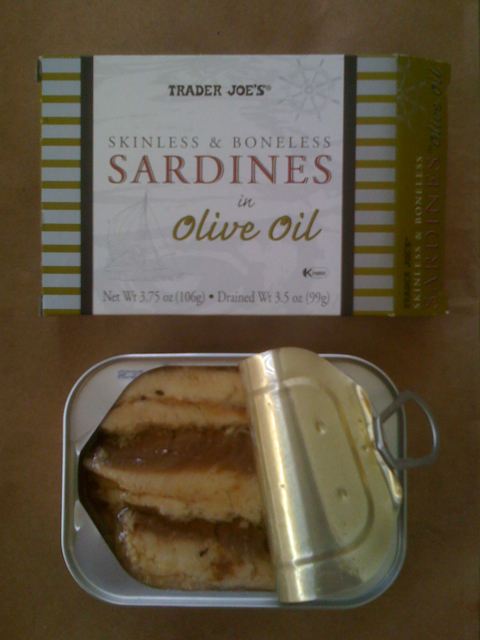
SHUT UP AND EAT YOUR SARDINES


Are you looking for a tasty snack, rich in omega 3, protein, iron, calcium.
This sardines on olive oil from Trader Joe's will do the work.
Throw away the excess olive oil and eat by it self, or mix with cuscus, salad, steamed rice with steamed green beans or use your imagination.

Tuesday, August 31, 2010

What is more intelligent, the "Brain" or the "Mind" and why?


This is a question that has recently being popping up,and this understanding helps our growth as humans.
Please give me your version, and I'll follow up with my answer.

Wednesday, August 18, 2010

Assessing Your Ironman Using the 4 Keys

Ironman can bring a human being to realize misteries of life.
This is a great article!
Enjoy the reading.
Ricardo


TeamEN at the Ironman USA finish line.
By Rich Strauss
Endurance Nation

We recently shared with you our Four Keys of Ironman Execution, four simple principles that have transformed the long course racing of thousands of athletes. We would like to now teach you how you can use these principles to assess your Ironman performance.

A Four Keys Review

First, let's review the Four Keys of Execution.

Race day is about execution, not fitness.
Nothing matters until the line, which is mile 18.
We get to the line and we set the conditions of success by racing inside a box. Everything that goes inside that box is what you can control. Everything outside of that box is what you can't control.
Your one thing. At the end of the day, when you hit the line, your body will begin to push back when it doesn't want to continue. This is when you pull out your one thing--the answer to the "why are you racing?" question. This is your mind's response to your body's demands to slow down or stop.
So, what does the above mean from a post-race perspective? When you are evaluating your race, the number one piece of data that you have on hand is your finishing time. It's very easy to know whether or not you achieved your goal time, but that information doesn't give any details about how your race day played out. After all, it only takes one mechanical to throw off your finish time, but you could have still had an excellent race. The true measure of your race is not the final time at the finish line, but how you got there.

Evaluating Your Race

Here's how you can use the Four Keys system to effectively review your race:

Step One: Did you race according to principles of execution or did your fitness dictate your day? This is a decision we all have to make at many points during the day when we have to decide if we want to accelerate away from someone on the swim, if we're going to be aggressive into a hill, or if we're going to run quickly for the first six miles.

Step Two: Where did you hit your line on race day? It's going to show up for all of us at some point in time. Perhaps it was at mile 18 or maybe it came earlier. Knowing where it happened gives you further insight as to how you paced your day: did it happen on he run, did it happen on a bike, was it late or early in the day? Where did you find yourself having the great mental versus physical debate that determines your finish?

Step Three: Did you race inside the box, focusing on what you could control? Or did your find yourself outside of the box focusing on external factors? There are countless times over the course of your Ironman day where you bump up against elements of friction in the competition that may or may not allow you to operate in a clean, efficient manner. Did you handle those moments well? Were you able to do what you needed to do to get passed it? What was it that forced you outside of your zone and how can you improve upon this next time?

Step Four: Your one thing. The line happens for all of us in an Ironman. When you hit it, you're going to need that one thing to be ready. How did your one thing work out? Was it powerful enough? Where you mentally strong enough? How effectively were you able to execute given your condition? All of those questions get at the meat of the issue: were you able to continue your race, and continue executing, when the chips were down?

Conclusion

The Four Keys is a great starting point for deeper introspection into your race, but it also allows for a very quick assessment of did I or did I not have a good day. Your ability to hit a specific time or a goal time in a day that is as long as an Ironman is pretty arbitrary. There are so many things that can go wrong, but you can quickly scan through your four keys list and decide whether or not you had a well-executed race despite the conditions.

Wednesday, June 09, 2010

Listen to Your Body to Avoid Injury: Part I

Listen to Your Body to Avoid Injury: Part I

By Wendy Benwell, PT, DPT, MS
Ability Rehabilitation Specialists

During the last few miles of the marathon at the 2010 Ironman New Zealand, I was experiencing several thoughts and emotions.

I was most enthusiastic about my body feeling strong, without muscle or joint pain. Seven months of training had finally paid off. My main goal for every Ironman triathlon has been to finish before the cut-off time feeling somewhat strong.

I am fortunate, being a doctor of physical therapy and certified as a USA Triathlon coach, that I am able to design a training program for myself which will help to prevent injuries, but also help me to finish a race feeling strong. I feel that my background has helped me avoid getting injured. We all need to learn how to listen to our bodies and understand what our body is telling us.

As a former collegiate volleyball player I had to deal with several injuries secondary to the increased demands of the sport, especially practice time. The most severe injury was a fractured lumbar spine. I endured years of physical therapy to overcome the pain and resumed playing volleyball at a high level.

It was very difficult to listen to my own body at that time. I was unaware of the consequences of playing through the pain and I felt I would be letting my team down if I could not play due to injury. I felt I owed it to my team, my school and my coach to play regardless of the pain level or the consequences to my body.

Throughout my educational training as a physical therapist I came to understand the importance of listening to one’s own symptoms during a sport. The effects of playing through pain can be detrimental. I know of many athletes who train endlessly for a marathon or a triathlon only to be sidelined by an injury.

If athletes listen to their own symptoms during their training, they will have a greater chance of recovering and rehabilitating before the race date.

Symptoms During Your Workout

Listening to your body is imperative when training for a running race or a triathlon. Symptoms that you might feel during training could either indicate joint stiffness, muscular tightness, muscle soreness or pain from a previous injury. Stiffness, soreness and tightness are normal symptoms encountered during training, especially in a warm-up.

These symptoms should subside after approximately 10 minutes of an easy warm-up. However, sharp pain or severe tightness that persists during the workout could indicate a serious injury.

If you experience severe tightness or pain which persists during the workout, decrease the intensity, decrease the distance and stretch mid-run. If your symptoms subside, return to your normal workout the next day and listen to your body during the warm-up and workout.

However, if the symptoms continue, rest from running for approximately 48 hours. Ice the area of concern for 15 minutes every two hours and assess the symptoms. If you feel symptoms at rest, the injured area is still inflamed and the athlete should continue to rest or perform pain-free cross training. If the symptoms persist at rest and last longer than two to four days, the athlete should seek professional advice from a qualified physician or physical therapist.

Listen or Else!

If the athlete continues with a high-intensity workout while experiencing severe symptoms, the injury can progress and become increasingly worse. For example, I had a patient who was a runner and was consistently increasing her mileage in preparation for a marathon. She experienced calf tightness during training which became worse as she continued to increase her mileage.

Instead of listening to her symptoms and decreasing her mileage, decreasing the intensity of her workout or resting, she continued to run. She continued to experience severe calf tightness, which slowly turned into pain and tightness at rest.

What could have been a mild to moderate calf strain turned into a massive Achilles tendon rupture during one of her training days. The rehabilitation lasted approximately six to eight months and included complete rest from running.

The Road to Recovery

When recovering from a mild to moderate injury, the athlete should be very cautious during their training. The focus should be pain-free training with a slow increase in mileage and intensity. If the athlete is a runner, pain-free cross training such as swimming or cycling will help to maintain endurance and strength without compromising the running injury.

If the athlete is a triathlete, continue to focus on pain-free training. If cycling was the cause of the injury, decrease the number of cycling days and add more running and/or swimming. This will help to maintain a high level of fitness without compromising their endurance.

During training days, focus on slower, longer distances rather than high-intensity training days such as intervals or hill repeats. If the athlete is pain-free with slower, longer distances, add in tempo work gradually. Tempo work will help to increase speed without a high demand on the healing tissues.

Once tempo work is pain-free, slowly add in interval work and easy hill repeats. Gradually return to your training program while listening to your body. Listening to your body during this time of rehabilitation is crucial for proper healing.

Learn more on this topic by reading Part II.

Wendy Benwell has her doctorate in physical therapy and a Master of Science degree in kinesiology. She is a level I USA Triathlon coach as well as a level III USA Cycling coach. She has been competing in marathons and triathlons for the past 10 years, ranging from Olympic-distance to Ironman triathlons. She continues to maintain a full-time career as an orthopedic physical therapist while training for Ironman competitions each year.

Thursday, June 03, 2010

Random thought

Speed can only be attained and sustained without struggle.
Ricardo Rodrigues

What is Beginner's Mind?

What is Beginner's Mind?

It Is our true nature, our young and hungry mind open to receive and analyze new information and experience the miracle of life.
A beginner mind, has little interference from unorganized thought patterns, so allowing the body to be more present, efficient and self-aware of it's balance in correlation with the environment at every moment.
Ricardo Rodrigues

Sunday, May 16, 2010

Encinitas Triathlon

Thanks to my sponsor Osiris for the support.
1st 40 - 44 Encinitas Sprint Triathlon
http://www.facebook.com/photo.php?pid=31139322&id=1487714442

Friday, September 11, 2009

Got inspiration?

"Consistency is a mysterious pattern of behavior. It distinguishes excellence from mediocrity. Some label this principle as "paying your dues" and that's an accurate assessment. No one, no matter how gifted or talented, will achieve their potential without it.
Consistency means time is spent with a focus in mind. An achiever has something to show for his time while his counterpart doesn't. E. Stanley Jones said of this focus factor, that "some people go through life getting results; others get consequences." in other words, if you aren't focused, your energy is dissipated and your consequences occur by default.
Power is not too strong a word to describe the desired results of using consistency. Think of this form of power as being dynamic, unfolding, unseen, but real. Tap the principle, use it, and enjoy the benefits."
Copyright 2004 by Dr. William G. Covington, Jr.

Monday, January 26, 2009

Feel Stronger with This Mineral

Been feeling like a wet dishrag lately? Could be you’re low on magnesium. Magnesium is a multitasking mineral, and one of its jobs is to power up our muscles. Unfortunately, many of us don’t get enough of it -- especially as we get older. Is Frailty Inevitable?To counter age-related muscle loss and bouts of feeling wimpy, you need to do two things:
Build up your muscles. Just starting out? Try this simple chair workout video. Got a bit more stamina? Try this more advanced resistance-band workout video.
Be sure you’re eating a balanced diet and getting your fair share of magnesium. Use this tool to look up magnesium-rich food sources. Start feeling strong this week! Make these bursting-with-magnesium recipes from EatingWell:
For breakfast: Tomato & Ham Breakfast Melt
For lunch: BBQ Baked Beans & Sausage
For dinner: One-Dish Chicken & Rice
For dessert: Chocolate & Nut Butter Bites Get fit in a flash! Check out the expert-guided RealAge fitness programs in the New Year, New You Center.
RealAge Benefit: Adequate magnesium intake (400 to 500 milligrams per day) can make your RealAge as much as 0.9 years younger.

Monday, November 17, 2008

More Amazing Olive Oil News

Olive oil -- the unsaturated fat that’s great for your heart -- is making headlines again. But this time it’s for helping something a little lower down: your stomach. Research suggests that polyphenols in olive oil may inhibit the bacterium that causes most stomach ulcers. Heard of H. Pylori?Antibiotics are the treatment gold standard for Helicobacter (H.) pylori, the ulcer-causing bacterium that’s tough enough to survive the acidity of people’s stomachs. But resistant strains of H. pylori are now found worldwide. Fortunately, some researchers are seeking alternative therapies, and in recent studies, the polyphenols in olive oil showed tremendous potential. Not only could they withstand the harsh gastric juices of the stomach, but they also seemed to kill off H. pylori pretty handily -- even antibiotic-resistant strains. Find out how to tell the difference between the burn of a stomach ulcer and the heat of heartburn. Olive Oil Power BoostersTo protect the polyphenols in your olive oil and get the most out of the stuff, store it in a dark bottle away from sunlight, and don’t overheat it. (Check out how the YOU Docs suggest heating your olive oil.) Recipe CornerSqueeze more olive oil into your day with these simple-to-do EatingWell recipes:
Give sauteed veggies a lift with Herbed Extra-Virgin Olive Oil.
Kick up the flavor of salads with a quick homemade dressing. Try this easy Basic Vinaigrette.
Set out these 10-minute Garlic-Herb Marinated Olives at your next soiree.
RealAge Benefit: Eating a low-fat diet -- and eating healthful unsaturated fats when you do eat fat -- can make your RealAge as much as 6 years younger.

Monday, June 23, 2008

Changing Speeds to Go the Distance

Published: April 17, 2008

SARA HALL experienced an instructive epiphany in 2006. In the fall, she’d won the national road-running championship for 5K (3.1 miles), a distance she specialized in at Stanford. At the time, she considered herself a 5K runner. So did everyone else.

Skip to next paragraph
Axel Koester for The New York Times

Sara Hall, an aspiring Olympian runner, trains at UC Riverside by running speed drills around the lap.

Multimedia

Graphic

Related

This article is the second in a series that began with “A Swimmer’s Different Strokes for Success” (March 20).

Axel Koester for The New York Times

Hall takes an ice bath after her daily exercise regimen to help with muscle recovery between training sessions.


A few weeks later, everything changed when she won the Fifth Avenue Mile in New York, a glamour event in American road racing. “Afterward, I thought, ‘That’s my distance,’ ” she said. “It plays to my strengths. I loved the fast pace. I’m not a patient runner.”

Today, Hall, 25, is laser-focused on training for the 1,500 meters (0.93 mile) in hopes of making the United States Olympic team in middle distance running.

She and her coach, Terrence Mahon, who also coaches Hall’s husband, Ryan Hall, the winner of the United States Olympic team men’s marathon trial, have increased her speed work and reconfigured how much she’s running and her intensity.

“Her work capacity has gone through the roof,” Mahon said, and she can run greater distances faster than ever before. Which makes her current regimen a good model for how recreational runners — not just the elite — can get swifter and sharper, and perhaps even decide that they have been racing the wrong distance all along.

SPEED THRILLS

“I’m not running as far these days,” Hall said, compared with the distances she ran in high school and college. That might come as a surprise to anyone who learns that her average weekly mileage remains 85 to 90 (compared with her husband’s 140-plus). A typical training week includes easy running on Monday, Wednesday, Friday and Sunday (usually twice a day). Hall, who can run almost a four-minute mile, lopes through these 30- or 50-minute workouts at a leisurely mile pace of 7 minutes. (To accurately figure her mile splits, she wears a watch equipped with G.P.S.) On Saturday, she takes a 14-mile run at a pace (5 minutes 45 seconds per mile) that is between what she runs in races and her easy days.

Then there are the fast, hard interval sessions at a track on Tuesdays and Thursdays. These hurt because they are supposed to. “You stress the body to get it to adapt” to the mechanical and physiological demands of speed, Mahon said. A typical Tuesday session includes two miles of warm-up, six miles of intervals and three miles of cool-down.

Anyone not aiming for an Olympic qualifying time should adjust speed-training mileage downward, Mahon said. “Go to a track and run a mile flat-out” and record your time, he said. Your ideal pace for a 5K race would be around 95 percent as fast per mile. Then implement what Mahon calls “over-speed and under-speed training.” In over-speed, you sprint through quarter-miles, 800 meters and other intervals at a speed faster than your 5K pace (close to your top mile time). Don’t run more than two fast miles.

For under-speed work, time your interval splits to be a little slower than your 5K pace, with shorter rest periods than those within the over-speed intervals. Total mileage can be four to six miles. Cool down with a gentle jog of about half your total interval distance.

Try sprinting one week, and running slower the next or, if you’re an experienced racer, both in separate sessions in a week. Don’t, despite its discomforts, worm out of speed work. “The most common mistake” that recreational runners make, Mahon said, “is running the same pace all the time.” Occasionally making yourself run fast, he said, “is the only way to make yourself a fast runner.”

STRIDE RIGHT

Hall kicks like a mule when she runs. She’s trying to stop. “This year, we’ve been totally focused on my form,” she said. “I tend to lean forward and I have a big back kick.” This slightly toppling stance lessens the power of her strides, and also has made her prone to being tripped up from behind during races.

Tuesday, June 03, 2008

The Six Habits for a Six-Pack

Losing belly flab is a boring process. It requires time, hard work, and most important, dedication. Take the right steps every single day, and you'll ultimately carve out your six-pack. But if you stray from your plan even a few times a week — which most men do — you'll probably never see your abs.

1. Wake up to water

Imagine not drinking all day at work — no coffee, no water, no diet soda. At the end of an 8-hour shift, you'd be pretty parched. Which is precisely why you should start rehydrating immediately after a full night's slumber. From now on, drink at least 16 ounces of chilledH2Oas soon as you rise in the morning. German scientists recently found that doing this boosts metabolism by 24 percent for 90 minutes afterward. (A smaller amount of water had no effect.) What's more, a previous study determined that muscle cells grow faster when they're well hydrated. A general rule of thumb: Guzzle at least a gallon of water over the course of a day.

2. Eat breakfast every day

A University of Massachusetts study showed that men who skip their morning meal are 4 1/2 times more likely to have bulging bellies than those who don't. So within an hour of waking, have a meal or protein shake with at least 250 calories. British researchers found that breakfast size was inversely related to waist size. That is, the larger the morning meal, the leaner the midsection. But keep the meal's size within reason: A 1,480-calorie smoked-sausage scramble at Denny's is really two breakfasts, so cap your intake at 500 calories. For a quick way to fuel up first thing, I like this recipe: Prepare a package of instant oatmeal and mix in a scoop of whey protein powder and 1/2 cup of blueberries.

3. As you eat, review your goals...

Don't worry, I'm not going all Tony Robbins on you. (I don't have enough teeth.) But it's important that you stay aware of your mission. University of Iowa scientists found that people who monitored their diet and exercise goals most frequently were more likely to achieve them than were goal setters who rarely reviewed their objectives.

4. ...and then pack your lunch

My personal Igloo cooler just celebrated its 19th anniversary. I started carrying it with me every day back in college. Of course, it often housed a six-pack of beer — until I decided to compete in the Purdue bodybuilding championship. (Second place, by the way.) Once I knew I'd have to don a banana hammock in public (the world's best motivator), I began to take the contents of my cooler seriously. And so should you. In fact, this habit should be as much a part of your morning ritual as showering. Here's what I recommend packing into your cooler:

An apple (to eat as a morning snack)

Two slices of cheese (to eat with the apple)

A 500- to 600-calorie portion of leftovers (for your lunch)

A premixed protein shake or a pint of milk (for your afternoon snack)

By using this approach, you'll keep your body well fed and satisfied throughout the day without overeating. You'll also provide your body with the nutrients it needs for your workout, no matter what time you exercise. Just as important, you'll be much less likely to be tempted by the office candy bowl. In fact, my personal rule is simple: I don't eat anything that's not in the cooler.

5. Exercise the right way

Everyone has abs, even if people can't always see them because they're hidden under a layer of flab. That means you don't need to do endless crunches to carve out a six-pack. Instead, you should spend most of your gym time burning off blubber.

The most effective strategy is a one-two approach of weight-lifting and high-intensity interval training. According to a recent University of Southern Maine study, half an hour of pumping iron burns as many calories as running at a 6-minute-per-mile pace for the same duration. (And it has the added benefit of helping you build muscle.) What's more, unlike aerobic exercise, lifting has been shown to boost metabolism for as long as 39 hours after the last repetition. Similar findings have been noted for intervals, which are short, all-out sprints interspersed with periods of rest.

For the best results, do a total-body weight-training workout 3 days a week, resting at least a day between sessions. Then do an interval-training session on the days in between. To make it easy on you, I've created the ultimate fat-burning plan, which appears on this month's workout poster.

6. Skip the late shows

You need sleep to unveil your six-pack. That's because lack of shut-eye may disrupt the hormones that control your ability to burn fat. For instance, University of Chicago scientists recently found that just 3 nights of poor sleep may cause your muscle cells to become resistant to the hormone insulin. Over time, this leads to fat storage around your belly.

To achieve a better night's sleep, review your goals again 15 minutes before bedtime. And while you're at it, write down your plans for the next day's work schedule, as well as any personal chores you need to accomplish. This can help prevent you from lying awake worrying about tomorrow ("I have to remember to e-mail Johnson"), which can cut into quality snooze time.

By Bill Hartman, P.T., C.S.C.S., Men's Health

Tuesday, May 06, 2008

"Bringing sexy back"

Running tips video by Ricardo Rodrigues

http://interactives.signonsandiego.com/sandiegoalive/


Wednesday, April 23, 2008

4 Ways to Baby Your Liver

Your liver is as vital to your health as your heart and lungs are. But do you know how to keep it healthy?

It can be as simple as living clean, adding crunch, and eyeing your supplements. Here’s what we mean by that.

Vital Parts
Your liver isn't just a place to filter out tequila shots. All of the blood that has visited your small intestine flows through the liver, where it gets detoxified. A big job, but something has to do it. Michael Roizen, MD, and Mehmet Oz, MD, RealAge experts and authors of the best-selling, newly expanded YOU: The Owner's Manual, have four tips for helping your liver help you.
  • Live clean. Reduce your personal pollution so there's less to filter out. Drink filtered water, eat unprocessed foods, choose veggie protein over red meat, and practice safe sex. And yes, keep the mojitos to a minimum. (For a teetotaler drink that's just as festive and tasty, try this Green Tea and Mango Splash.)
  • Add crunchy veggies. Cruciferous produce (like broccoli and cabbage), B-rich foods (like whole grains), and high C items (like citrus fruit and leafy greens) assist the liver's detoxifying process. (Here's what else cruciferous veggies do for your health.)
  • Consider a supplement. Lecithin (egg yolks and soybeans are good sources) and zinc (look up food sources here) support liver function, and you may want to consider supplementing your diet with them if you don't get much naturally. Herbs like milk thistle and dandelion may help liver function, too, but consult your doctor before taking them.
  • Don't take too much vitamin A. If you do, you risk liver problems, including cirrhosis. (Learn more about the dangers of vitamin A overload.)