Thursday, June 16, 2011


Wednesday, April 20, 2011
Bottle Neck
Have you ever face a bottle neck in your work, life, and body?
Of course you need to identify it and then know what to do.
The bottle neck is the most important part to improve a balanced and prosperous, work, life and body.
Tackle it face on!
Ricardo Rodrigues

- Posted using BlogPress from my iPad
Of course you need to identify it and then know what to do.
The bottle neck is the most important part to improve a balanced and prosperous, work, life and body.
Tackle it face on!
Ricardo Rodrigues
- Posted using BlogPress from my iPad
Tuesday, March 29, 2011
Quote
"It's not the load that breaks you down, it's the way you carry it."
~ Lou Holtz

- Posted using BlogPress from my iPad
~ Lou Holtz
- Posted using BlogPress from my iPad
Location:Roselle St,San Diego,United States
Thursday, March 24, 2011
The spirit of competition.
It is great when you feel healthy, loose, fast, attentive, calm, balance and ready for whatever it comes.
Preparation is in the past now, and all you have to do is unleash.
Rivals? Why? They are playing the same game you are. Use them as your pacing buddies.
Time? Time will just hold you back with frustration.
What is more important then:
The excitement of the start:
The body floating and and skimming the water side to side in synchronicity;
The feel of your body in aerodynamic position circling pass the air;
The feeling of freedom on every step lightly moving you forward;
The sense of accomplishment when you cross the finish line.

PLAY
Location:San Diego
Tuesday, March 22, 2011
Keeping it real
The body is this genius machine that give us feedback at all times.
Is so common and also insane, that we get into a deep stage of denial and don't get the message.
Understand your own body
Or just give me a call and I'll enrich you 858- 229-7198

- Posted using BlogPress from my iPad
Is so common and also insane, that we get into a deep stage of denial and don't get the message.
Understand your own body
Or just give me a call and I'll enrich you 858- 229-7198
- Posted using BlogPress from my iPad
Monday, March 21, 2011
Thursday, March 17, 2011
The formula to a modern human fitness
Your body can be as vulnerable as it can be prepared for any movement at any moment.
pay attention to your:
POSTURE
FLEXIBILITY
BALANCE
AGILITY
Everyday

pay attention to your:
POSTURE
FLEXIBILITY
BALANCE
AGILITY
Everyday
Location:Caminito Gianna,,United States
Wednesday, March 16, 2011

Tuesday, March 15, 2011
RUNNING AND IT'S 4 ELEMENTS
What?
Ricardo Rodrigues will present a seminar on how to utilize simple earthy elements to better your running and prevent injuries.
When? Tuesday March 29th 2011 6pm
Where? Beginner's Mind Studio 10671 Roselle st suite 102, San Diego, CA 92121
Why? Because running is a great type of exercise, when we were born to it. (that's right, we are all born to run.
Running Seminar
Would you like to learn from a runner/coach/triathlete ( I also call my self Tarzan)
WHAT?
The principals and the understanding of the basic elements of running.
WHEN?
Tuesday March 28 at 6pm
WHY?
Running is the easiest fitness toll to anybody that want to have a healthy lifestyle.
Or
You can run faster injury free.

Friday, October 22, 2010
Snack Tip
SHUT UP AND EAT YOUR SARDINES

Are you looking for a tasty snack, rich in omega 3, protein, iron, calcium.
This sardines on olive oil from Trader Joe's will do the work.
Throw away the excess olive oil and eat by it self, or mix with cuscus, salad, steamed rice with steamed green beans or use your imagination.

Are you looking for a tasty snack, rich in omega 3, protein, iron, calcium.
This sardines on olive oil from Trader Joe's will do the work.
Throw away the excess olive oil and eat by it self, or mix with cuscus, salad, steamed rice with steamed green beans or use your imagination.
Tuesday, August 31, 2010
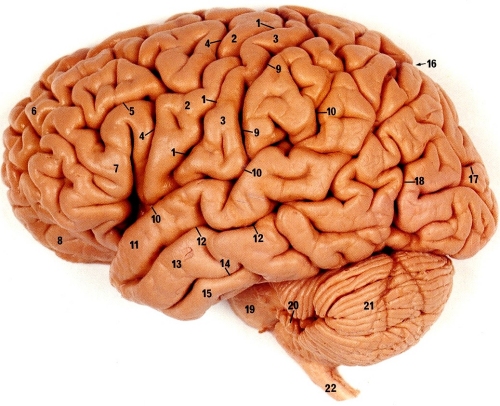
What is more intelligent, the "Brain" or the "Mind" and why?

This is a question that has recently being popping up,and this understanding helps our growth as humans.
Please give me your version, and I'll follow up with my answer.
Wednesday, August 18, 2010
Assessing Your Ironman Using the 4 Keys
Ironman can bring a human being to realize misteries of life.
This is a great article!
Enjoy the reading.
Ricardo
TeamEN at the Ironman USA finish line.
By Rich Strauss
Endurance Nation
We recently shared with you our Four Keys of Ironman Execution, four simple principles that have transformed the long course racing of thousands of athletes. We would like to now teach you how you can use these principles to assess your Ironman performance.
A Four Keys Review
First, let's review the Four Keys of Execution.
Race day is about execution, not fitness.
Nothing matters until the line, which is mile 18.
We get to the line and we set the conditions of success by racing inside a box. Everything that goes inside that box is what you can control. Everything outside of that box is what you can't control.
Your one thing. At the end of the day, when you hit the line, your body will begin to push back when it doesn't want to continue. This is when you pull out your one thing--the answer to the "why are you racing?" question. This is your mind's response to your body's demands to slow down or stop.
So, what does the above mean from a post-race perspective? When you are evaluating your race, the number one piece of data that you have on hand is your finishing time. It's very easy to know whether or not you achieved your goal time, but that information doesn't give any details about how your race day played out. After all, it only takes one mechanical to throw off your finish time, but you could have still had an excellent race. The true measure of your race is not the final time at the finish line, but how you got there.
Evaluating Your Race
Here's how you can use the Four Keys system to effectively review your race:
Step One: Did you race according to principles of execution or did your fitness dictate your day? This is a decision we all have to make at many points during the day when we have to decide if we want to accelerate away from someone on the swim, if we're going to be aggressive into a hill, or if we're going to run quickly for the first six miles.
Step Two: Where did you hit your line on race day? It's going to show up for all of us at some point in time. Perhaps it was at mile 18 or maybe it came earlier. Knowing where it happened gives you further insight as to how you paced your day: did it happen on he run, did it happen on a bike, was it late or early in the day? Where did you find yourself having the great mental versus physical debate that determines your finish?
Step Three: Did you race inside the box, focusing on what you could control? Or did your find yourself outside of the box focusing on external factors? There are countless times over the course of your Ironman day where you bump up against elements of friction in the competition that may or may not allow you to operate in a clean, efficient manner. Did you handle those moments well? Were you able to do what you needed to do to get passed it? What was it that forced you outside of your zone and how can you improve upon this next time?
Step Four: Your one thing. The line happens for all of us in an Ironman. When you hit it, you're going to need that one thing to be ready. How did your one thing work out? Was it powerful enough? Where you mentally strong enough? How effectively were you able to execute given your condition? All of those questions get at the meat of the issue: were you able to continue your race, and continue executing, when the chips were down?
Conclusion
The Four Keys is a great starting point for deeper introspection into your race, but it also allows for a very quick assessment of did I or did I not have a good day. Your ability to hit a specific time or a goal time in a day that is as long as an Ironman is pretty arbitrary. There are so many things that can go wrong, but you can quickly scan through your four keys list and decide whether or not you had a well-executed race despite the conditions.
This is a great article!
Enjoy the reading.
Ricardo
TeamEN at the Ironman USA finish line.
By Rich Strauss
Endurance Nation
We recently shared with you our Four Keys of Ironman Execution, four simple principles that have transformed the long course racing of thousands of athletes. We would like to now teach you how you can use these principles to assess your Ironman performance.
A Four Keys Review
First, let's review the Four Keys of Execution.
Race day is about execution, not fitness.
Nothing matters until the line, which is mile 18.
We get to the line and we set the conditions of success by racing inside a box. Everything that goes inside that box is what you can control. Everything outside of that box is what you can't control.
Your one thing. At the end of the day, when you hit the line, your body will begin to push back when it doesn't want to continue. This is when you pull out your one thing--the answer to the "why are you racing?" question. This is your mind's response to your body's demands to slow down or stop.
So, what does the above mean from a post-race perspective? When you are evaluating your race, the number one piece of data that you have on hand is your finishing time. It's very easy to know whether or not you achieved your goal time, but that information doesn't give any details about how your race day played out. After all, it only takes one mechanical to throw off your finish time, but you could have still had an excellent race. The true measure of your race is not the final time at the finish line, but how you got there.
Evaluating Your Race
Here's how you can use the Four Keys system to effectively review your race:
Step One: Did you race according to principles of execution or did your fitness dictate your day? This is a decision we all have to make at many points during the day when we have to decide if we want to accelerate away from someone on the swim, if we're going to be aggressive into a hill, or if we're going to run quickly for the first six miles.
Step Two: Where did you hit your line on race day? It's going to show up for all of us at some point in time. Perhaps it was at mile 18 or maybe it came earlier. Knowing where it happened gives you further insight as to how you paced your day: did it happen on he run, did it happen on a bike, was it late or early in the day? Where did you find yourself having the great mental versus physical debate that determines your finish?
Step Three: Did you race inside the box, focusing on what you could control? Or did your find yourself outside of the box focusing on external factors? There are countless times over the course of your Ironman day where you bump up against elements of friction in the competition that may or may not allow you to operate in a clean, efficient manner. Did you handle those moments well? Were you able to do what you needed to do to get passed it? What was it that forced you outside of your zone and how can you improve upon this next time?
Step Four: Your one thing. The line happens for all of us in an Ironman. When you hit it, you're going to need that one thing to be ready. How did your one thing work out? Was it powerful enough? Where you mentally strong enough? How effectively were you able to execute given your condition? All of those questions get at the meat of the issue: were you able to continue your race, and continue executing, when the chips were down?
Conclusion
The Four Keys is a great starting point for deeper introspection into your race, but it also allows for a very quick assessment of did I or did I not have a good day. Your ability to hit a specific time or a goal time in a day that is as long as an Ironman is pretty arbitrary. There are so many things that can go wrong, but you can quickly scan through your four keys list and decide whether or not you had a well-executed race despite the conditions.
Wednesday, June 09, 2010
Listen to Your Body to Avoid Injury: Part I
Listen to Your Body to Avoid Injury: Part I
By Wendy Benwell, PT, DPT, MS
Ability Rehabilitation Specialists
During the last few miles of the marathon at the 2010 Ironman New Zealand, I was experiencing several thoughts and emotions.
I was most enthusiastic about my body feeling strong, without muscle or joint pain. Seven months of training had finally paid off. My main goal for every Ironman triathlon has been to finish before the cut-off time feeling somewhat strong.
I am fortunate, being a doctor of physical therapy and certified as a USA Triathlon coach, that I am able to design a training program for myself which will help to prevent injuries, but also help me to finish a race feeling strong. I feel that my background has helped me avoid getting injured. We all need to learn how to listen to our bodies and understand what our body is telling us.
As a former collegiate volleyball player I had to deal with several injuries secondary to the increased demands of the sport, especially practice time. The most severe injury was a fractured lumbar spine. I endured years of physical therapy to overcome the pain and resumed playing volleyball at a high level.
It was very difficult to listen to my own body at that time. I was unaware of the consequences of playing through the pain and I felt I would be letting my team down if I could not play due to injury. I felt I owed it to my team, my school and my coach to play regardless of the pain level or the consequences to my body.
Throughout my educational training as a physical therapist I came to understand the importance of listening to one’s own symptoms during a sport. The effects of playing through pain can be detrimental. I know of many athletes who train endlessly for a marathon or a triathlon only to be sidelined by an injury.
If athletes listen to their own symptoms during their training, they will have a greater chance of recovering and rehabilitating before the race date.
Symptoms During Your Workout
Listening to your body is imperative when training for a running race or a triathlon. Symptoms that you might feel during training could either indicate joint stiffness, muscular tightness, muscle soreness or pain from a previous injury. Stiffness, soreness and tightness are normal symptoms encountered during training, especially in a warm-up.
These symptoms should subside after approximately 10 minutes of an easy warm-up. However, sharp pain or severe tightness that persists during the workout could indicate a serious injury.
If you experience severe tightness or pain which persists during the workout, decrease the intensity, decrease the distance and stretch mid-run. If your symptoms subside, return to your normal workout the next day and listen to your body during the warm-up and workout.
However, if the symptoms continue, rest from running for approximately 48 hours. Ice the area of concern for 15 minutes every two hours and assess the symptoms. If you feel symptoms at rest, the injured area is still inflamed and the athlete should continue to rest or perform pain-free cross training. If the symptoms persist at rest and last longer than two to four days, the athlete should seek professional advice from a qualified physician or physical therapist.
Listen or Else!
If the athlete continues with a high-intensity workout while experiencing severe symptoms, the injury can progress and become increasingly worse. For example, I had a patient who was a runner and was consistently increasing her mileage in preparation for a marathon. She experienced calf tightness during training which became worse as she continued to increase her mileage.
Instead of listening to her symptoms and decreasing her mileage, decreasing the intensity of her workout or resting, she continued to run. She continued to experience severe calf tightness, which slowly turned into pain and tightness at rest.
What could have been a mild to moderate calf strain turned into a massive Achilles tendon rupture during one of her training days. The rehabilitation lasted approximately six to eight months and included complete rest from running.
The Road to Recovery
When recovering from a mild to moderate injury, the athlete should be very cautious during their training. The focus should be pain-free training with a slow increase in mileage and intensity. If the athlete is a runner, pain-free cross training such as swimming or cycling will help to maintain endurance and strength without compromising the running injury.
If the athlete is a triathlete, continue to focus on pain-free training. If cycling was the cause of the injury, decrease the number of cycling days and add more running and/or swimming. This will help to maintain a high level of fitness without compromising their endurance.
During training days, focus on slower, longer distances rather than high-intensity training days such as intervals or hill repeats. If the athlete is pain-free with slower, longer distances, add in tempo work gradually. Tempo work will help to increase speed without a high demand on the healing tissues.
Once tempo work is pain-free, slowly add in interval work and easy hill repeats. Gradually return to your training program while listening to your body. Listening to your body during this time of rehabilitation is crucial for proper healing.
Learn more on this topic by reading Part II.
Wendy Benwell has her doctorate in physical therapy and a Master of Science degree in kinesiology. She is a level I USA Triathlon coach as well as a level III USA Cycling coach. She has been competing in marathons and triathlons for the past 10 years, ranging from Olympic-distance to Ironman triathlons. She continues to maintain a full-time career as an orthopedic physical therapist while training for Ironman competitions each year.
By Wendy Benwell, PT, DPT, MS
Ability Rehabilitation Specialists
During the last few miles of the marathon at the 2010 Ironman New Zealand, I was experiencing several thoughts and emotions.
I was most enthusiastic about my body feeling strong, without muscle or joint pain. Seven months of training had finally paid off. My main goal for every Ironman triathlon has been to finish before the cut-off time feeling somewhat strong.
I am fortunate, being a doctor of physical therapy and certified as a USA Triathlon coach, that I am able to design a training program for myself which will help to prevent injuries, but also help me to finish a race feeling strong. I feel that my background has helped me avoid getting injured. We all need to learn how to listen to our bodies and understand what our body is telling us.
As a former collegiate volleyball player I had to deal with several injuries secondary to the increased demands of the sport, especially practice time. The most severe injury was a fractured lumbar spine. I endured years of physical therapy to overcome the pain and resumed playing volleyball at a high level.
It was very difficult to listen to my own body at that time. I was unaware of the consequences of playing through the pain and I felt I would be letting my team down if I could not play due to injury. I felt I owed it to my team, my school and my coach to play regardless of the pain level or the consequences to my body.
Throughout my educational training as a physical therapist I came to understand the importance of listening to one’s own symptoms during a sport. The effects of playing through pain can be detrimental. I know of many athletes who train endlessly for a marathon or a triathlon only to be sidelined by an injury.
If athletes listen to their own symptoms during their training, they will have a greater chance of recovering and rehabilitating before the race date.
Symptoms During Your Workout
Listening to your body is imperative when training for a running race or a triathlon. Symptoms that you might feel during training could either indicate joint stiffness, muscular tightness, muscle soreness or pain from a previous injury. Stiffness, soreness and tightness are normal symptoms encountered during training, especially in a warm-up.
These symptoms should subside after approximately 10 minutes of an easy warm-up. However, sharp pain or severe tightness that persists during the workout could indicate a serious injury.
If you experience severe tightness or pain which persists during the workout, decrease the intensity, decrease the distance and stretch mid-run. If your symptoms subside, return to your normal workout the next day and listen to your body during the warm-up and workout.
However, if the symptoms continue, rest from running for approximately 48 hours. Ice the area of concern for 15 minutes every two hours and assess the symptoms. If you feel symptoms at rest, the injured area is still inflamed and the athlete should continue to rest or perform pain-free cross training. If the symptoms persist at rest and last longer than two to four days, the athlete should seek professional advice from a qualified physician or physical therapist.
Listen or Else!
If the athlete continues with a high-intensity workout while experiencing severe symptoms, the injury can progress and become increasingly worse. For example, I had a patient who was a runner and was consistently increasing her mileage in preparation for a marathon. She experienced calf tightness during training which became worse as she continued to increase her mileage.
Instead of listening to her symptoms and decreasing her mileage, decreasing the intensity of her workout or resting, she continued to run. She continued to experience severe calf tightness, which slowly turned into pain and tightness at rest.
What could have been a mild to moderate calf strain turned into a massive Achilles tendon rupture during one of her training days. The rehabilitation lasted approximately six to eight months and included complete rest from running.
The Road to Recovery
When recovering from a mild to moderate injury, the athlete should be very cautious during their training. The focus should be pain-free training with a slow increase in mileage and intensity. If the athlete is a runner, pain-free cross training such as swimming or cycling will help to maintain endurance and strength without compromising the running injury.
If the athlete is a triathlete, continue to focus on pain-free training. If cycling was the cause of the injury, decrease the number of cycling days and add more running and/or swimming. This will help to maintain a high level of fitness without compromising their endurance.
During training days, focus on slower, longer distances rather than high-intensity training days such as intervals or hill repeats. If the athlete is pain-free with slower, longer distances, add in tempo work gradually. Tempo work will help to increase speed without a high demand on the healing tissues.
Once tempo work is pain-free, slowly add in interval work and easy hill repeats. Gradually return to your training program while listening to your body. Listening to your body during this time of rehabilitation is crucial for proper healing.
Learn more on this topic by reading Part II.
Wendy Benwell has her doctorate in physical therapy and a Master of Science degree in kinesiology. She is a level I USA Triathlon coach as well as a level III USA Cycling coach. She has been competing in marathons and triathlons for the past 10 years, ranging from Olympic-distance to Ironman triathlons. She continues to maintain a full-time career as an orthopedic physical therapist while training for Ironman competitions each year.
Thursday, June 03, 2010
What is Beginner's Mind?
What is Beginner's Mind?
It Is our true nature, our young and hungry mind open to receive and analyze new information and experience the miracle of life.
A beginner mind, has little interference from unorganized thought patterns, so allowing the body to be more present, efficient and self-aware of it's balance in correlation with the environment at every moment.
Ricardo Rodrigues
It Is our true nature, our young and hungry mind open to receive and analyze new information and experience the miracle of life.
A beginner mind, has little interference from unorganized thought patterns, so allowing the body to be more present, efficient and self-aware of it's balance in correlation with the environment at every moment.
Ricardo Rodrigues
Thursday, May 27, 2010
Sunday, May 16, 2010
Encinitas Triathlon
Thanks to my sponsor Osiris for the support.
1st 40 - 44 Encinitas Sprint Triathlon
http://www.facebook.com/photo.php?pid=31139322&id=1487714442
1st 40 - 44 Encinitas Sprint Triathlon
http://www.facebook.com/photo.php?pid=31139322&id=1487714442
Friday, September 11, 2009
Got inspiration?
"Consistency is a mysterious pattern of behavior. It distinguishes excellence from mediocrity. Some label this principle as "paying your dues" and that's an accurate assessment. No one, no matter how gifted or talented, will achieve their potential without it.
Consistency means time is spent with a focus in mind. An achiever has something to show for his time while his counterpart doesn't. E. Stanley Jones said of this focus factor, that "some people go through life getting results; others get consequences." in other words, if you aren't focused, your energy is dissipated and your consequences occur by default.
Power is not too strong a word to describe the desired results of using consistency. Think of this form of power as being dynamic, unfolding, unseen, but real. Tap the principle, use it, and enjoy the benefits."
Copyright 2004 by Dr. William G. Covington, Jr.
Consistency means time is spent with a focus in mind. An achiever has something to show for his time while his counterpart doesn't. E. Stanley Jones said of this focus factor, that "some people go through life getting results; others get consequences." in other words, if you aren't focused, your energy is dissipated and your consequences occur by default.
Power is not too strong a word to describe the desired results of using consistency. Think of this form of power as being dynamic, unfolding, unseen, but real. Tap the principle, use it, and enjoy the benefits."
Copyright 2004 by Dr. William G. Covington, Jr.
Monday, January 26, 2009
Feel Stronger with This Mineral
Been feeling like a wet dishrag lately? Could be you’re low on magnesium. Magnesium is a multitasking mineral, and one of its jobs is to power up our muscles. Unfortunately, many of us don’t get enough of it -- especially as we get older. Is Frailty Inevitable?To counter age-related muscle loss and bouts of feeling wimpy, you need to do two things:
Build up your muscles. Just starting out? Try this simple chair workout video. Got a bit more stamina? Try this more advanced resistance-band workout video.
Be sure you’re eating a balanced diet and getting your fair share of magnesium. Use this tool to look up magnesium-rich food sources. Start feeling strong this week! Make these bursting-with-magnesium recipes from EatingWell:
For breakfast: Tomato & Ham Breakfast Melt
For lunch: BBQ Baked Beans & Sausage
For dinner: One-Dish Chicken & Rice
For dessert: Chocolate & Nut Butter Bites Get fit in a flash! Check out the expert-guided RealAge fitness programs in the New Year, New You Center.
RealAge Benefit: Adequate magnesium intake (400 to 500 milligrams per day) can make your RealAge as much as 0.9 years younger.
Build up your muscles. Just starting out? Try this simple chair workout video. Got a bit more stamina? Try this more advanced resistance-band workout video.
Be sure you’re eating a balanced diet and getting your fair share of magnesium. Use this tool to look up magnesium-rich food sources. Start feeling strong this week! Make these bursting-with-magnesium recipes from EatingWell:
For breakfast: Tomato & Ham Breakfast Melt
For lunch: BBQ Baked Beans & Sausage
For dinner: One-Dish Chicken & Rice
For dessert: Chocolate & Nut Butter Bites Get fit in a flash! Check out the expert-guided RealAge fitness programs in the New Year, New You Center.
RealAge Benefit: Adequate magnesium intake (400 to 500 milligrams per day) can make your RealAge as much as 0.9 years younger.
Subscribe to:
Posts (Atom)